## Sophisticated Investment Analysis: Seoul Real Estate for Global VVIP Investors
Executive Summary:
Seoul’s real estate market presents a compelling, albeit nuanced, opportunity for global VVIP investors seeking capital preservation, long-term appreciation, and portfolio diversification within a robust East Asian economic powerhouse. While direct yields on prime residential assets may appear modest compared to certain global counterparts, the market’s allure lies in its structural undersupply, unwavering demand from a highly affluent local population, burgeoning global city status, and resilience in the face of economic fluctuations. Strategic entry points, particularly within ultra-luxury residential and core Grade A commercial sectors, offer trophy assets that cater to both financial prudence and lifestyle aspirations. Success hinges on a deep understanding of local regulatory complexities, a long-term investment horizon, and bespoke advisory partnerships.
I. Seoul’s Macro-Economic & Geopolitical Context: A Foundation of Stability & Innovation**
South Korea, the world’s 10th largest economy, boasts a highly diversified, innovation-driven economic structure led by global giants in technology (Samsung, LG), automotive (Hyundai), and chemicals. Seoul, as its capital, acts as the epicenter of this economic dynamism, a financial hub, and an increasingly influential global cultural nexus (“K-Culture”).
* **Economic Resilience:** Despite global headwinds, South Korea’s economy has demonstrated remarkable resilience, driven by strong export performance, robust domestic consumption, and continuous investment in R&D. Its highly educated workforce and advanced infrastructure further solidify its competitive edge.
* **Global City Status:** Seoul consistently ranks high among global cities for its technological prowess, quality of life, public safety, and connectivity. This attracts international talent and businesses, fueling demand for prime real estate.
* **Political Stability:** Despite occasional regional geopolitical narratives, South Korea maintains a stable democratic political system and robust alliances, providing a secure environment for long-term capital deployment.
* **Demographic Magnet:** While national demographics present long-term challenges (aging population, low birth rates), Seoul continues to be a demographic magnet within Korea, drawing young, affluent professionals and families, ensuring sustained local demand for premium urban living.
🚀 놓치면 후회할 기회, 2000조 상장 소식
SpaceX IPO 투자 가이드 보기II. Seoul Real Estate Market Dynamics: Scarcity, Prestige, and Persistent Demand
Seoul’s real estate market is characterized by a confluence of factors that drive its unique value proposition:
* **Structural Undersupply:** Geographic constraints (mountains, rivers, green belts) combined with stringent redevelopment regulations and a history of government-led supply control measures have consistently led to a dearth of prime inventory, particularly in desirable central districts. This scarcity is a fundamental driver of capital appreciation.
* **Government Policy Influence:** Historically, Korean governments have actively intervened to cool the real estate market through various measures (loan restrictions, property transaction taxes, multiple-home owner taxes). However, recent administrations have shown a more supply-side friendly approach, recognizing the need to ease housing shortages. Navigating these policy shifts is paramount.
* **Low Direct Yields, High Capital Appreciation:** For ultra-luxury residential properties, direct rental yields are generally low (typically 1-3%), reflecting the asset’s primary function as a store of value and a hedge against inflation rather than a pure cash-flow generator. The primary investment thesis here is long-term capital appreciation, which has been robust in prime areas over decades. Commercial properties offer slightly better yields, depending on asset quality and tenant profile.
* **Flight to Quality:** In times of economic uncertainty, Seoul’s prime real estate, particularly in resilient, well-connected districts, experiences a “flight to quality,” further underpinning its value as a safe-haven asset.
* **Rising Luxury Segment:** The number of high-net-worth individuals (HNWIs) in South Korea is growing rapidly, fueling an escalating demand for ultra-luxury residential offerings, branded residences, and bespoke living experiences that rival global counterparts.
III. Strategic Investment Segments for Global VVIPs:
For VVIP investors, the focus should be on *trophy assets* that offer intrinsic value, exclusivity, and robust long-term growth potential.
✨ AI가 제안하는 완벽한 하루
나보다 나를 더 잘 아는 AI 에이전트와 함께하세요


1. **Ultra-Luxury Residential (Core-Plus/Value-Add):**
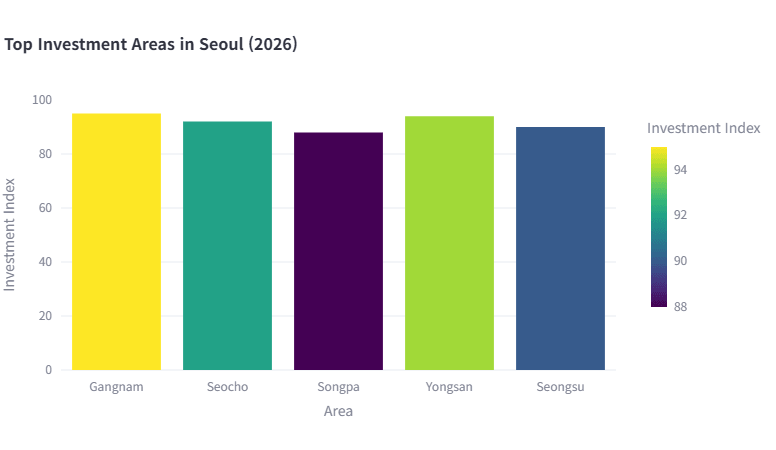
* **Target Areas:** **Gangnam District** (Apgujeong-dong, Cheongdam-dong), **Hannam-dong** (Yongsan District), **Seongsu-dong** (Ttukseom area), and selected pockets of **Jamsil** (Songpa District).
* **Asset Types:**
* **High-end Apartments/Penthouses:** Focus on new developments with state-of-the-art amenities, smart home technology, and prestigious addresses. Branded residences (e.g., Four Seasons, Signiel) are gaining traction.
* **Luxury Single-Family Homes/Villas:** Extremely rare, primarily in Hannam-dong or affluent parts of Gangnam, offering privacy and large land plots. These are often legacy assets.
* **Redevelopment Opportunities:** Participating in select, well-vetted *reconstruction projects (재건축)* of older, prime-located apartment complexes can yield significant returns, but require deep local knowledge, patient capital, and navigate complex regulations.
* **Investment Thesis:** Capital preservation, significant long-term appreciation fueled by scarcity and rising affluence, lifestyle asset for personal use or high-end rental income from expatriates/local HNWIs.
2. **Grade A Commercial Real Estate (Core):**
* **Target Areas:** **Gangnam Business District (GBD)**, **Central Business District (CBD)** (Gwanghwamun, Jongno), **Yeouido Business District (YBD)** (Finance hub).
* **Asset Types:**
* **Prime Office Towers:** Investing in, or developing, Grade A office spaces with long-term leases from multinational corporations or stable Korean conglomerates.
* **High-Street Retail:** Select prime retail assets in high-footfall luxury shopping districts (e.g., Apgujeong Rodeo Street, Cheongdam Fashion Street, Myeongdong) with stable, high-credit tenants.
* **Logistics (Opportunistic):** While not traditional VVIP assets, modern, automated logistics centers outside Seoul but serving the metropolitan area can offer attractive yields due to the surge in e-commerce.
* **Investment Thesis:** Stable cash flow, diversified income stream, institutional-grade asset with potential for moderate capital appreciation, and exposure to Korea’s robust corporate sector.
3. **Niche & Opportunistic Plays:**
* **Boutique Hospitality/Serviced Apartments:** Growing demand for unique, high-end experiences, particularly in cultural districts like Bukchon/Samcheong-dong or fashionable areas like Garosu-gil.
* **Data Centers:** As a global tech hub, Korea has immense demand for data center infrastructure, offering specialized investment opportunities with strong growth potential.
IV. Salient Considerations & Risks for Global VVIPs:
1. **Regulatory & Tax Complexities:**
* **Foreign Ownership:** Generally permitted with some reporting requirements.
* **Acquisition Tax (취득세):** Significant, varying by property type and ownership structure, but generally higher for multiple property owners.
* **Holding Tax (재산세, 종합부동산세):** Annual property taxes can be substantial, especially for high-value properties and multiple holdings, with progressive rates.
* **Capital Gains Tax (양도소득세):** Can be high, especially for short-term gains and multiple property owners. Inheritance and gift taxes are also very high.
* **Currency Risk:** Fluctuations in the Korean Won (KRW) against the investor’s base currency can impact returns. Hedging strategies should be considered.
* **Local Anti-Speculation Measures:** Be prepared for potential future government interventions designed to cool the market.
2. **Market Specific Risks:**
* **Low Liquidity for Ultra-Luxury:** High-value, unique assets might take longer to sell.
* **Dependency on Local Demand:** While Seoul is a global city, the primary drivers for prime residential are affluent Koreans.
* **Information Asymmetry:** The local market can be opaque for foreign investors without proper guidance.
3. **Geopolitical Risk (Mitigated):**
* While North Korea presents an ongoing geopolitical risk, the market has historically shown remarkable resilience and often discounts this factor for long-term investments.
**V. Strategic Recommendations for Global VVIP Investors:**
1. **Embrace a Long-Term Horizon (7-10+ years):** Seoul real estate is a strategic, patient capital play for capital appreciation and legacy building, not short-term speculation.
2. **Focus on “Best-in-Class” Trophy Assets:** Prioritize prime locations, superior construction quality, exclusive amenities, and strong underlying demand drivers. Eschew secondary markets or speculative ventures without exceptional local insight.
3. **Mandate Comprehensive Due Diligence:** Engage top-tier local legal, tax, and real estate advisory firms from the outset. Understanding the intricate regulatory framework and tax implications is paramount.
4. **Structure for Efficiency:** Explore optimal ownership structures (e.g., local Special Purpose Vehicle – SPV, offshore vehicles with local presence) to mitigate tax burdens and facilitate management, tailored to individual investor domicile and tax treaties.
5. **Leverage Local Expertise & Networks:** Partner with well-established Korean real estate developers, asset managers, or private wealth advisors who possess unparalleled local market intelligence, access to off-market deals, and navigating complex governmental procedures.
6. **Consider Diversification within Seoul:** A balanced portfolio might include a prime ultra-luxury residential unit for potential personal use/legacy and a stake in a core commercial asset for stable income.
7. **Actively Manage and Adapt:** The regulatory landscape can shift. Proactive management, regular review of tax implications, and adaptation to market changes are crucial.
8. **Evaluate Redevelopment Joint Ventures:** For sophisticated investors with higher risk appetites, co-investing in carefully selected reconstruction projects with reputable local developers can unlock significant value, albeit with longer gestation periods and more intricate management.
—
**Conclusion:**
Seoul’s real estate market offers a compelling value proposition for global VVIP investors seeking sophisticated assets that promise capital appreciation, stability, and exclusivity within a vibrant, technologically advanced global city. The opportunity lies not in high direct yields but in the enduring scarcity of prime inventory, the relentless demand from a growing affluent population, and the city’s strategic importance. By adopting a long-term perspective, meticulously navigating regulatory intricacies with expert local counsel, and focusing on the very best assets, VVIP investors can secure a valuable, resilient, and prestigious addition to their global real estate portfolios.
2026년 자산 관리 전략에 꼭 필요한 핵심 리포트를 선별했습니다. 아래 관련 정보를 통해 투자 인사이트를 넓혀보세요.
* 모든 정보는 최신 시장 분석 데이터를 기반으로 작성되었습니다.